

Dhamma research : ค้นหาหนังสือธรรมะ หน้า 1 / 7
หน้าหนังสือทั้งหมด
100
The Dhammakāya Verse: A Lan Na Thai Manuscript
The Dhammakāya Verse:
a Lan Na Thai manuscript
Kitchai Urkasem
This article is a report on research undertaken with the support of the 60th Dhamma chai Education Foundation (DEF) on a palm leaf manu
This article discusses research supported by the 60th Dhamma chai Education Foundation on a palm leaf manuscript titled Dhamma kāya from northern Thailand's Lan Na region. Undated, it is believed to h
10
Congratulatory Letter for Dhammachai International Research Institute
**Congratulatory letter**
The 60th Dhammachai Education Foundation of Australia and New Zealand has developed an increasing commitment in recent years to the academic study of the Buddhist tradition,
The 60th Dhammachai Education Foundation of Australia and New Zealand has strengthened its commitment to studying the Buddhist tradition. The foundation established the Dhammachai International Resear
16
Launch of the Journal of the Dhammachai International Research Institute
Introduction
This collection of articles marks the launch of the Journal of the Dhammachai International Research Institute (JDIRI). The articles presented here indicate some of the perspectives on B
This collection of articles marks the launch of the JDIRI, showcasing perspectives on Early Buddhism and meditation studies. The journal aims to publish research on ancient manuscripts and esoteric pr
50
Understanding the Connotation of Dhamma in Relation to Brahma
In the case that ‘brahma-’ refers to the masculine ‘Brahma’
In case of the term ‘brahma-’ in the three compounds50 being
translated as a masculine ‘Brahma,’51 the comparison of the first and
the third
In this text, the term 'brahma-' is analyzed in the context of its translation as the masculine 'Brahma.' It discusses how the comparison between the Tathāgata and the Brahma, the creator, illustrates
13
Inaugural Volume of Buddhist Research by Dhammachai International Research Institute
Inpirational Message
On the 44th Anniversary of the Ordination of Most Venerable Founder Luang Phaw Dhammajayo on 27th August 2012 and also in the historical year of the Buddhajayanti 2600 celebration
On August 27, 2012, the Dhammachai International Research Institute (DIRI) marked the 44th anniversary of Luang Phaw Dhammajayo's ordination and the significant Buddhajayanti 2600. This inaugural rese

96
The Impact of Dhamma Quiz Competitions on Youth
Even though each Quiz Competition may last only one day, young participants will still have to spend quite some time studying Dhamma before hand. They in turn absorb Dhamma into their mind without kno
Even though each Quiz Competition may last only one day, young participants will still have to spend quite some time studying Dhamma beforehand. This process positively impacts their thoughts, speech,
54
Understanding Dhamma and Brahman in Buddhism
In the case that 'brahma-' refers to the neuter 'brahman'
In the other case in which the term brahma- is translated as 'brahman'63 the ultimate,64 the third parallel65 suggests that the term dhamma in
This text clarifies that the term 'brahma-' can refer to either the masculine 'Brahmā' or the neuter 'brahman,' ultimately leading to the view that dhamma signifies transcendental realities. It sugges
72
The Path to Right View and World Peace
Nic Mush-wi. A Dhamma Master
must have the right view in order to start, and to understand, how to bring about world peace. We know, of course, that we are all made of body, mind, and Dhamma, and wit
This text emphasizes the significance of the right view in attaining world peace, stating that Dhamma must be understood and implemented in one’s life. The essence of meditation tied to the eightfold

5
การวิจัยเชิงคณะกรรมาธิการในพระพุทธศาสนา
การวิจัยเชิงคณะกรรมาธิการ: กรณีศึกษา "ถ้ามีจัับกับปัจจุบันสูตร?" 5
รูปแบบการวิจัยเชิงคณะกรรมาธิการ
ในการศึกษาวิจัยทั้งสายวิทยาศาสตร์และศิลปศาสตร์นั้น เมื่อแบ่งตามประโยชน์ของการวิจัยแล้ว สามารถแบ่งออก
การวิจัยเชิงคณะกรรมาธิการในพระพุทธศาสนาแบ่งเป็น 2 รูปแบบใหญ่ คือ การวิจัยพื้นฐานที่มุ่งหาความรู้ใหม่ และการวิจัยประยุกต์ที่มุ่งใช้ความรู้ในการแก้ปัญหา นอกจากนี้ยังมีการศึกษาวิจัยเชิงคัมภีร์ซึ่งอาศัยแห
40
Understanding Dhammakāya in Aṅgāṇā-sutta
In brief, contemporary academics refer to the term dhammakāya in the Aṅgāṇā-sutta either as a noun or an adjective. As a noun, the term is interpreted mostly as the Buddha’s teachings collected togeth
The term dhammakāya is interpreted in contemporary academia as both a noun and an adjective. As a noun, it denotes the Buddha’s teachings, while as an adjective, it refers to the nature of the Tathāga
48
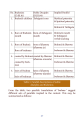
Brahmins and Noble Disciples: A Comparative Analysis
No. | Brahmins (D.III.81) | Noble Disciples (D.III.84) | Implied Parallel
---|------------------------|---------------------------|------------------------
1. | Brahma's children | Tathägata's sons |
The text presents a comparative analysis between Brahmins and Noble Disciples, highlighting their similarities in mythical and spiritual parental origins. It details how both are seen as offsprings of
32
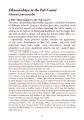
Dhamma-kāya in the Pali Canon
Dhamma-kāya in the Pali Canon¹
Chanida Jantrasrisalai
I. Why ‘Dhamma-kāya’ in the ‘Pali Canon’?
The term dhamma-kāya/dharmakāya appears in Buddhist literature of different schools. Previous scholars
The study investigates the term dhamma-kāya as presented in the Pali Canon, aiming to provide a comprehensive analysis that has been overlooked in previous studies. While many references have been mad
41
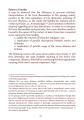
Understanding Dhammakāya: A Scholarly Interpretation
Points to Consider
It may be observed that the difference in previous scholarly interpretations of the term dhammakāya in this passage mainly pertains to the inter-relatedness of two distinctive meani
This text delves into scholarly interpretations of the term 'dhammakāya', emphasizing the need for a nuanced understanding of 'dhamma' as both a realized reality and a verbal expression. It identifies
58
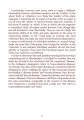
Understanding the Concept of Body and Collection in Dhamma
Functionally, however, both terms seem to imply a different relationship between individual members and the ‘totality’ of the whole ‘body’ or ‘collection.’ As a ‘body,’ the ‘totality’ of the whole org
This text analyzes the distinctions between the terms 'body' and 'collection' within the framework of Dhamma, particularly focusing on functional dependence. It argues that while a 'body' maintains es
81
Understanding Dhammikāya in Buddhist Philosophy
Dhammapāla, like Buddhaghosa, employs the term dhammikāya
mostly as a noun, and relates it either with the Buddha’s mental
qualities and purity,134 with the Enlightenment either of the Buddha135
or hi
Dhammapāla discusses dhammikāya, relating it to the Buddha's mental qualities and Enlightenment. This term connects the Buddha's teachings and truths, illustrating his purity and extraordinary qualiti
108
Understanding Defilements and Dhamma in Buddhism
Meticulous with a Dharma Messenger
If we are not mindful, then defilements become even more apparent to us. We must bring together concentration, effort, and meditation. They must all come together.
This text delves into the importance of mindfulness to combat defilements and achieve purity through meditation. It emphasizes the synergy of concentration, effort, and mindfulness. The Buddha's journ
2
Dhammachai International Research Institute (DIRI) Overview
The Dhammachai International Research Institute (DIRI) is a research institute that traces the roots of the Buddha’s teachings back to original manuscripts with the aim of finding true and clear evide
The Dhammachai International Research Institute (DIRI) is dedicated to tracing the origins of the Buddha's teachings, aiming to discover clear evidence of early Dhamma practices. Established by the 60
54
Raising Smart and Virtuous Children
utilize the four requisites, how they work, and how they
conduct their daily activities.
Parents can instill wholesomeness, intelligence, and
compassion towards others by teaching their children resp
This text discusses the importance of teaching children the four requisites—respect, discipline, and endurance. It emphasizes the balance between worldly wisdom and Dhamma wisdom, highlighting how bot
53
Understanding Dhamma and Nibbāna in Buddhism
With regard to dhamma as the 'essence' of the Buddha and Arhat disciples, however, it may be more appropriate to refer to 'Nibbāna,' for once they have attained Buddhahood and Arhatship their spiritua
This text explores the concept of dhamma in relation to the Buddha and Arhat disciples, particularly the notion of Nibbāna as the essence of their enlightenment. It argues that dhamma, especially in t
61
Exploring the Concept of Dhammakaya
First, as a *kammadhāra* compound, the translation of the term *dhammākāya* will be ‘the body that is transcendental (lokuttara) dhamma’ or ‘the body that is Nibbāna.’ This gives a similar sense as th
The term Dhammakaya can be viewed in two ways: as a kammadhāra compound translated to mean 'the body that is transcendental dhamma' or as a tappurisa compound meaning 'body pertaining to transcendenta